
193. SPN: Donor Personalization
Plus, Pulse of the Donor '26 and plenty of Jobs & Opps

A very warm welcome to all the new subscribers. You’ve joined a global community of more than 4k marketing and fund raising operators at mission-driven Orgs. I’m thrilled to have you as readers and truly appreciate your feedback and support.
In this week’s SPN:
Creative: production is no longer the bottleneck
Personalization → rules and 7 how-to’s
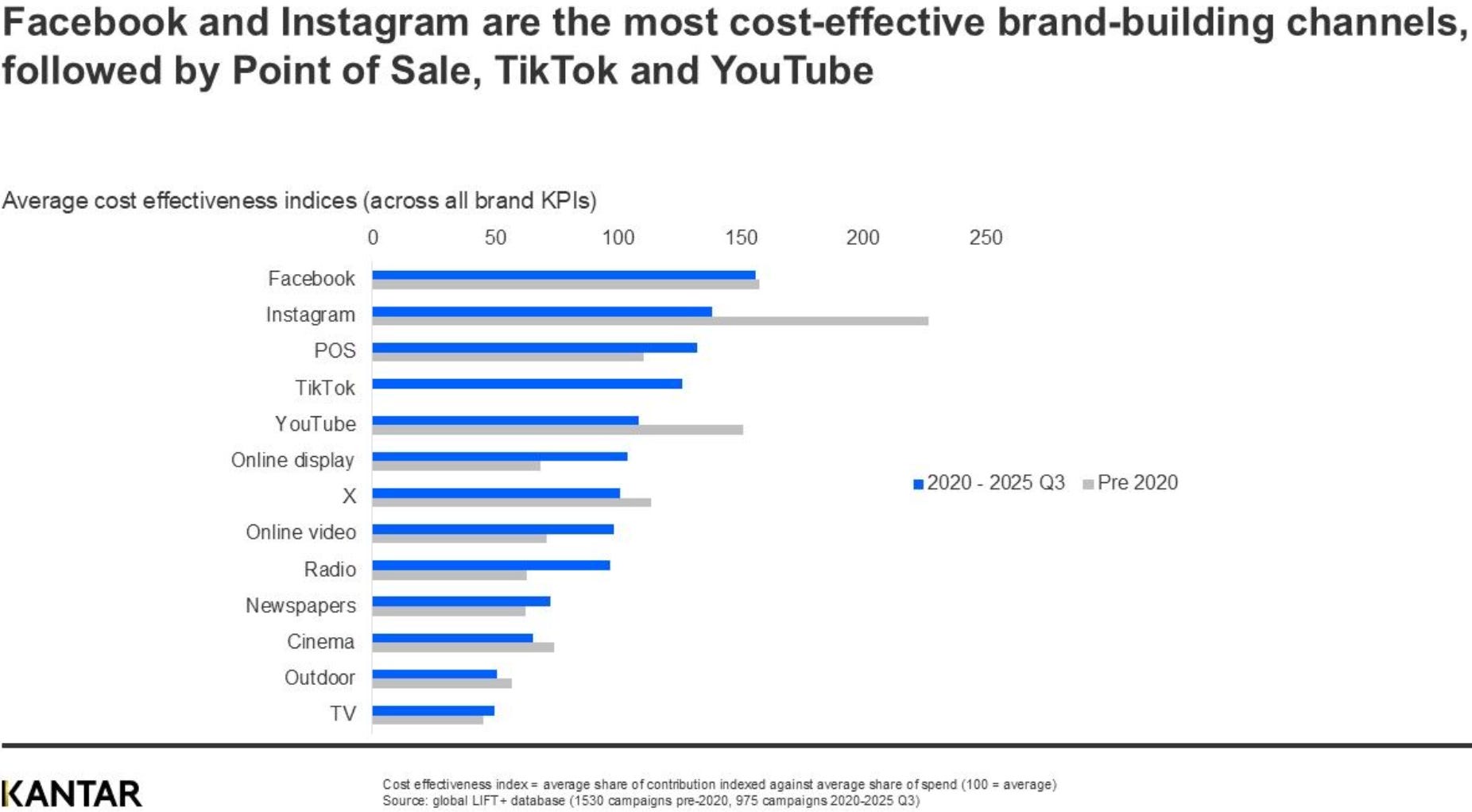
Brand-building channels
And, plenty of Jobs & Opps
Let’s jump in.
How does your Org stack up against the industry average? 📊
Fundraise Up just released the Pulse of the Donor 2026 report:
✅ Mobile now accounts for 50%+ of all donations
✅ Social has a 2x higher conversion to Monthly giving than email
✅ Recurring gift enrollment increased double digits YoY in the US
Plot your 2026 strategy with these insights and leverage the data from 1,000+ organizations to your advantage.
Game-changer? It is for me!

Chart of the Week
Creative
AI will transform paid media faster than any other function inside your marketing team because it’s structured, measurable, and built on repeatable patterns. In many ways Ads were built for AI. Short. Direct-Response. Formulaic.

Here’s the advantage for Orgs :
1. Creative teams will focus more on constraints
The best human creativity has always been about ideas that couldn’t be predicted or optimized for. Sony Balls. Cadbury Gorilla. The ALS Bucket challenge. That won’t change. But increasingly the job will also include setting the constraints that AI executes within, and applying taste and judgment to what comes back:
Brand values.
Tone.
Visual language.
(Core elements that separate effective ads from AI slop).
2. AI will do most of the production work.
The biggest shift will be AI generating and evolving creative in response to signals. Which means not just a human brief, or just a monthly creative review but insights at a depth and scale impossible previously.
Think - deconstructing hundreds of videos from the field or donors at galas to find what made them work. Identifying patterns across thousands of ads. Analyzing yours and peer orgs’ creative millisecond by millisecond.
3 Signals Will Drive This Evolution:
→ Contextual
Creative built on what’s happening around the ad.
Now → Dynamic catalog ads respond to individual user behavioral signals.
Next → Executions synthesize cultural trends, peer Org activity and surrounding content to generate the most relevant ad for that moment. The creative evolves as the signals change.
E.G. a video hook is going viral within the “emergency fundraising” category, the Org (advertiser) generates an ad that replicates it instantly.
→ Conversational
Creative that evolves to answer specific needs of a single user.
Now → Early pilots embed Business AI into ads.
Next → Ads with AI assistants embedded to answer any question and handle objections. With billions more donor conversations, a consistent brand voice will matter even more.
E.G. “How will my $75 actually be used?” Yes - here’s exactly what it funds, in your area, this week.
→ Cumulative
Creative built on what has been proven to work.
Now → Effectiveness companies like System1 and Kantar publish reports on what creative decisions consistently drive outcomes.
Next → Companies like these use AI to generate ads from decades of measured effectiveness data. Emotional triggers, structural patterns, proven creative decisions. The risk is every ad starts to look the same. Creative constraints prevent that.
E.G. AI trained on the highest-performing disaster appeals generates a new appeal that mirrors their emotional structure: urgency → identifiable victim → clear dollar impact → social proof within your brand’s creative constraints.
For Orgs, this means better CTR and faster response to crises, smarter recurring upgrades, and fewer missed signals from high-intent donors.
Very few Orgs are starting to test these types of approaches. But we’ve now had production limitations all but removed, which means the gap between insight and execution is fast disappearing. I vote jump onboard!
The best creative teams in five years will be judged on the constraints they set, the signals they harness and the tone they define. Somebody better give the Cannes judges a heads up that things are changing around here ;)
→ Production is no longer the bottleneck. Judgment is.
Weekly Reads
Microdrama Platforms Spend 90% of Budgets on Marketing (Variety)
Netflix’s CEO Ted Sarandos on the Today programme - about ads (Meta)
The average streamer in the US takes 20 minutes to find something to watch (Evan Shapīro)
Beyond Rankings and Traffic: The New Metrics for Digital Marketing Success (Neil Patel)
Walmart says AI users build 35% bigger baskets than others (Retail Dive)
X is full of these stories but worth watching I Built a Marketing Operating System Inside Claude Code
How social media algorithms ‘flatten’ our culture by making decisions for us (NPR)
Websites Are Fading, Brands Prepare For What’s Next (MediaPost)
Donor Personalization:
10 rules + 7 How to Do It Examples → Increase CVR

Here are 10 rules - and 7 practical examples of How to Do It – of good personalization.
Most web personalization I see falls into one of two buckets: creepy or useless.
Some are bad and creepy, like a Meta feed full of Cancun resort ads after I mention to friends at dinner that I’m really tired. Or an Org emailing me with “We noticed you didn’t finish your donation” ten minutes after I closed the tab. Not something I would donate to.
Some are bad and useless. The “Hi {First_Name}” in the subject line. A homepage banner that says “Welcome back!” after I only visited once, eight months ago – and definitely don’t remember that I did. Mail merge disguised as personalization.
Good personalization isn’t about proving your Org knows things about the donor – the “I see you” line would fit better in a horror movie. Good personalization increases revenue by removing friction and slightly – unnoticeably - increasing relevance, so the donor gets closer to donating, faster – and maybe considers donating $5. The donor should never “feel” it.
But doing it well is hard – harder than deploying the Salesforce Marketing Cloud Einstein model to “figure it out”.
Rules:
1) The marketer always decides the “what.”
Never start a conversation with “What can our personalization platform do?”. Pick one element you want to change on the page, website, or app. Then pick the lever: is it copy, layout, imagery, CTA, amount defaults, form length, or something else? Only then pick the tool that’s fit for the job. Tools don’t create strategy. They amplify it.
I’ve seen too many Orgs buy Optimizely or its kind and then scramble to find things to personalize.
2) Use micro-segments instead of 1:1.
True 1:1 personalization is a myth in my books. Your Org doesn’t have the data, the compute, the content library, or, frankly, the financial means to deliver a unique experience to every visitor. Reserve that for high-luxury products and phone conversations with major donors, where the revenue margin makes it sensible.
Stick to micro-segments large enough to matter, small enough to justify variation (e.g. 5,000-10,000 people) instead: groups of visitors who share enough context to justify a different experience. Example is: “returning visitor from email, donated before, on mobile, currently on Global Hunger page” versus “new visitor from paid search, never donated, on desktop, currently on Children Malnutrition page”.
3) Personalize the moments that move the dollars.
Not every page is worth the effort. Focus on three or four moments with outsized impact on conversion and donation value:
Landing page headline
Donation form defaults (amounts + monthly vs one-time)
Post-donation Thank You page
The first 7 days of email/SMS
Annual “mini impact report” email
4) Avoid (explicitly) asking donors for data.
Donors hate filling in forms. Use the information already available to you through their journey:
UTM source/medium/campaign – ensure meaningful taxonomy for your campaigns, so you can use it as an indication of keywords or interests of donors beyond “brand” and “non-brand”. My preference is to always structure campaigns around “mission pillars” of the Org I work with.
Device category
New vs returning visitor
Donor vs non-donor vs lapsed donor
Landing page topic
Recency of visits
Doing these 6 right will put you ahead of 95% of the Orgs.
5) No BTS.
Showing different donation amounts based on traffic source or enriched net worth data is fine. Showing the “We saw you visited our clean water page three times” phrase, not so much.
6) Test against “no personalization” instead of different personalization options.
At the end of the day, the goal of personalization is to increase revenue more than it increases effort and cost for the Org. If one copy option works better – stick with it. Wikimedia’s copy is the same for every donor, every time. And yet, it works for them. Sometimes the best-performing experience is the simplest one.
7) Always start with the donation form.
This is where the dollar moves from one pocket to another. Use it to test all ideas – then scale the working ones up the funnel into CTAs and creative options.
Amount options
Copy
Colors
Imagery
8) Build a content library, first.
Personalization is a mechanism to show different content to different humans – build up the library of great options first. Test frequently – add a new email variant every week, try a new image every day, and so on. The ones that stand out, belong in your Org’s personalization library.
9) Measure lift per micro-segment.
Personalization rarely works on blended metrics – you’ll get some options right, some wrong, and lose the difference in the AVERAGE function. Compare the pre/post for every segment you are deploying rules for, in particular. Metrics I track:
Sessions
Donate starts (divided by sessions)
Donation completes (divided by starts)
Average donation value
10) Revisit old rules regularly.
Set a 90-day review date for every active rule or journey, and measure again – old personalized content is probably worse than new, but generic.
Now, how to do it…
7 Examples – from simplest to the most complex:
Example: Dynamic donation amounts by traffic source to reflect the higher intent of those further along on the journey.
In Fundraise Up, or whichever donation platform you have, create conditional rules based on UTM source/medium:
Paid Search branded: $50, $100, $250, $500.
Meta prospecting: $25, $35, $50, $100.
Email to existing donors: $75, $150, $300, $500.
Example: Monthly-first option for returning visitors.
(option 1) In your donation form, use the “returning visitor” condition to set monthly as the default – based on the GA4 cookie.
(option 2) In Optimizely / web personalization tool, create a rule: if visitor cookie exists AND page = /donate, swap the toggle to monthly.
Example: Post-donation Thank You page by mission pillar.
In GA4, define the landing page as a custom dimension on the donation event.
In your CMS, create 3-5 Thank You page variants, each tied to a mission pillar (global hunger, child malnutrition, unhealthy food).
Use Optimizely or simple UTM-based redirects to route users to the right Thank You page.
On each page, include a 30-second staff video about that specific pillar.
Example: Landing page headline swap by audience interest segment.
Define segments in GA4 audiences: (a) new visitor from paid, (b) returning visitor from email, (c) lapsed donor from retargeting to capture their depth in the journey.
Overlay these segments with interest indicators: keywords from Google Ads, Mission Pillar landing page, or a memo they left on their most-recent donation.
In Optimizely, create rules triggered by audience membership (combining depth in journey and interest).
Example: Email-to-web continuity.
In your email platform (Mailchimp, Salesforce Marketing Cloud, HubSpot), append donor ID or an encrypted hash of their email to the CTA link to preserve privacy
On the landing page, use that ID or hash to pull first name and last gift amount from your CRM via API in real time or pass the values as encrypted URL parameters.
Set the monthly default to roughly a third of their last one-time gift – a number that has proven to work best for me, personally. You can test your options.
Example: Personalized Thank You Videos at scale (by micro-segment).
Build a small automated table pulling data from your CRM: first name, gift amount, mission pillar, city/state.
Use Descript to create a template video with scenes: a human intro (pre-recorded once by Org’s CEO or program lead), then text overlay scenes that pull from the data feed.
Use ElevenLabs to generate a neutral voiceover that reads the personalized lines. One voice, cloned from your ED/CEO’s recording, keeps it consistent.
Host on Vimeo or Wistia for per-viewer analytics. Embed the thumbnail in the Thank You email with a play button.
An example from Carvana works brilliantly because it’s celebratory, not extractive. They did it two years ago and since then AI video has only gotten better. Check it out here.
Example: LLM-generated landing page copy per micro-segment.
Start from only 5-8 micro segments. For each one, write a one-paragraph brief in your own language of how you’d like to communicate to them: who they are, what they care about, what objection they might have, and what CTA tone works (urgent, warm, big red button, etc.).
Feed those briefs into Claude (my personal favorite) or any other model of choice with a prompt like: “Write 5 headline variants, 3 subheadline variants, and 2 CTA button texts for each segment brief. Keep headlines under 10 words. Use data where possible.”
Review every one and edit to remain on-brand.
Load the winning variants into Optimizely as personalization rules, matched to the segment definitions.
Good personalization is invisible. It shortens the path to giving and it feels easy. And easy converts… make it rain.
OK, that’s all for today!
Jobs & Opps below. I hope you’ve found one nugget today that you can put into play next week.
If you enjoyed this SPN, please consider sharing with your network. Thank you to those that do.
If a friend sent this to you, get the next edition of SPN by signing up below.
And huge thanks to this Quarter’s sponsor Fundraise Up for creating a new standard for online giving.
Jobs & Opps 🛠️
Earthjustice: Managing Editor, Donor Communications ($105,000 - $137,000)
Make-A-Wish: VP Strategy and Transformation ($236,000 - $260,000)
CARE: Senior Director, Donor Experience ($130,967 - $152,250)
Twilio: Sr. Growth & Events Marketing Manager, Social Impact ($123,760 - $171,900)
Build-a-Bear Foundation: Foundation Director (ED)
WWF-UK: Head of Supporter Engagement (£56,297)
Sick Kids Foundation: Associate Director, Philanthropy
Louisiana Children’s Museum: Advancement Director ($80,000 - $90,000)
English National Opera: Senior Philanthropy Manager (£50,000-55,000)
United Way of Greater Los Angeles: VP, Marketing & Communications ($175,000 - $210,000)
Little Village: Head of Data, Digital & Technology (£62,400)
UNICEF: Market Research Specialist, Fixed Term Position, Panama City (P-3)
Mercy Corps: Director of Acquisition and Growth ($90,000 - $120,000)
Global Giving: Digital Fundraising Manager
YMCA of the USA: VP, Brand Engagement